



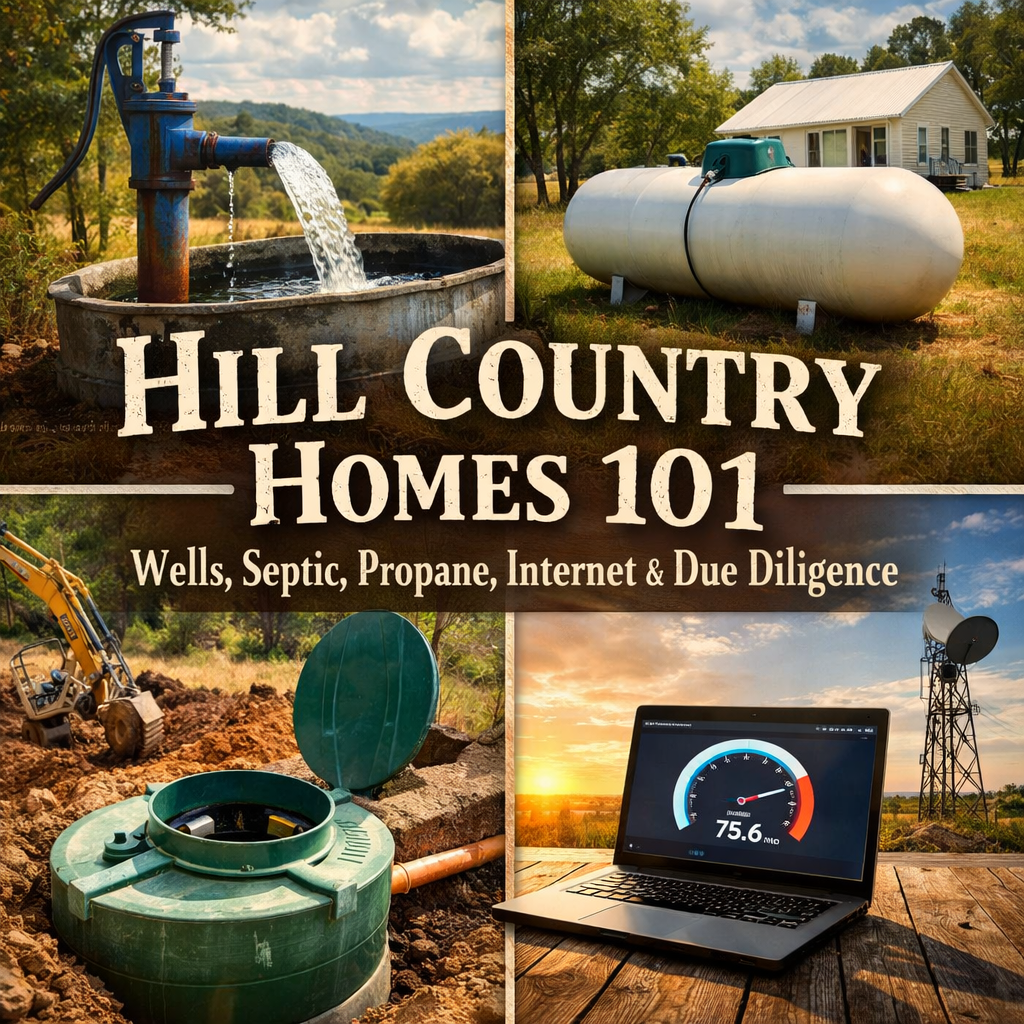
Buying a home in the Texas Hill Country feels like a dream—big skies, space, views, privacy. But Hill Country living also comes with a different set of systems than many “city utility” neighborhoods. Instead of city water and sewer, you may be relying on a private well, septic, propane, and a more creative approach to internet.
This guide walks you through the essentials—what to look for, what to ask for, and how to protect yourself in the option/feasibility period—so you can buy with confidence (and avoid expensive surprises).
1) Wells: Your water source (and your biggest question mark)
A private well isn’t “good” or “bad”—it’s a system. The goal is to verify water quality and water quantity for your household’s needs.
What to verify
- Well depth + age + type (drilled vs. other)
- Pump type and age (submersible vs jet pump) and whether it’s been replaced
- Storage: Is there a pressure tank only, or also a storage tank/cistern?
- Water treatment: softener, filtration, UV, reverse osmosis, etc.
- Well location and access (easements matter)
Tests that matter (most buyers skip at least one)
- Water quality test (baseline safety and usability)
- Bacteria / coliform test (commonly requested)
- Flow rate / yield test (can it keep up with showers + laundry + irrigation?)
Red flags to watch for
- “We’ve never had an issue” but no test records
- A well that’s shared with neighbors (shared agreements should be documented)
- Strong odors, staining, or corrosion at fixtures (often treatable, but you need to price it)
Pro tip: Even if the water “tastes fine,” treatment needs can be real in the Hill Country—plan on budgeting for filtration/softening if tests show it’s needed.
2) Septic systems: Not scary—just inspectable
If you’ve only owned homes on city sewer, septic can feel intimidating. The reality: a properly designed and maintained system can run smoothly for years—but you need to confirm the type, condition, and capacity.
What to ask for
- Septic permit and design (if available)
- System type: conventional, aerobic, etc.
- Age of system and service history
- Last pump-out date and maintenance records (especially for aerobic systems)
Inspections to request
- A septic inspection by a qualified provider (not just “it drains”)
- Verify sprinkler heads / aerobic components if applicable
- Confirm any alarm panel functions (if installed)
Common pitfalls
- The home has more bedrooms than the system was designed for
- No maintenance history on aerobic systems
- Drain field issues (standing water, odor, overly green patches)
Bottom line: Your due diligence should confirm the system matches the home’s actual use and is functioning as intended.
3) Water beyond the well: Storage, drought reality, and hauling options
Some Hill Country properties rely on:
- Well + storage tank
- Rainwater collection
- Community supply
- Hauled water (delivered to a cistern)
If a home uses a cistern or hauled water, your questions shift:
- How large is the storage tank?
- What’s the typical delivery frequency and cost?
- What’s the backup plan if deliveries are delayed?
- Is there a booster pump and filtration?
Even well homes may benefit from storage, especially where yield is lower or drought patterns affect recharge.
4) Propane: Efficient, common, and easy to overlook
Propane often fuels:
- Cooking ranges
- Water heaters
- Fireplaces
- Generators
- Pool heaters
Due diligence checklist for propane
- Is the tank owned or leased? (huge difference)
- If leased: Which provider, and what are the contract terms?
- Tank size (and where it’s located)
- Approximate annual usage (ask for a year of bills if possible)
- Confirm appliances are set up correctly (propane vs natural gas)
Pro tip: If the tank is leased, you may have fewer choices on pricing and service—know what you’re inheriting.
5) Internet in the Hill Country: Verify before you fall in love
Internet is often the deciding factor for buyers who work from home. Many listings say “available,” but availability can mean “in the area,” not “at the house.”
Common options
- Cable or fiber (limited pockets, but growing)
- Fixed wireless
- DSL (sometimes slow)
- Cellular (depends heavily on signal + tower load)
- Satellite (including options from Starlink)
What you should do during due diligence
- Run speed tests on-site, inside the home (not just at the road)
- Check cell signal from the major carriers in multiple rooms
- Confirm install timelines and costs with providers (not just “serviceable”)
Pro tip: If you need reliable video calls, don’t guess—test it.
6) Due diligence: The Hill Country “must-do” list
Hill Country purchases reward buyers who treat due diligence like a system check—not just a home inspection.
Property-level items to verify
- Survey and any easements (access, shared drives, utilities, well agreements)
- Flood risk/drainage (even outside mapped floodplains)
- Road type (county maintained vs private) and maintenance responsibility
- HOA/POA rules (if applicable), especially for short-term rentals, animals, outbuildings
- Wildfire risk and defensible space
- Insurance availability and cost (start early)
Systems-level items to verify
- Well tests (quality + yield)
- Septic inspection and permit/design (if available)
- Propane tank ownership/lease and appliance compatibility
- Internet verification and realistic performance
- Any additional water storage or treatment needs
Budget items many buyers forget
- Filtration/softener systems
- Septic maintenance schedules
- Propane refills (seasonality matters)
- Driveway/road maintenance if private
- Backup power planning (generators are common in some areas)
We help buyers and sellers navigate Hill Country properties with a practical, boots-on-the-ground approach—coordinating the right inspections, flagging common system pitfalls early, and guiding negotiations with clear documentation. If you’re considering a home on well/septic/propane (or you’re selling one), we’ll help you plan the process so there are fewer surprises and smoother closings.
FAQs
Do I need a well inspection if the water is running during the showing?
Yes. Running water doesn’t confirm water quality, sustainable flow, or whether the well can keep up with daily demand.
How often does a septic system need to be pumped?
It depends on household size, tank size, and usage. What matters most is confirming current condition and a realistic maintenance plan.
Is propane a deal-breaker?
Not at all—propane is common and can be efficient. The key is understanding tank ownership/lease terms and expected operating cost.
What’s the biggest Hill Country mistake buyers make?
Assuming systems are “standard” without verifying them during the option/feasibility period—especially internet and water.
Can I negotiate repairs or credits for these systems?
Often, yes—if inspections/tests reveal issues. The stronger your documentation, the stronger your position.
Check out this article next