



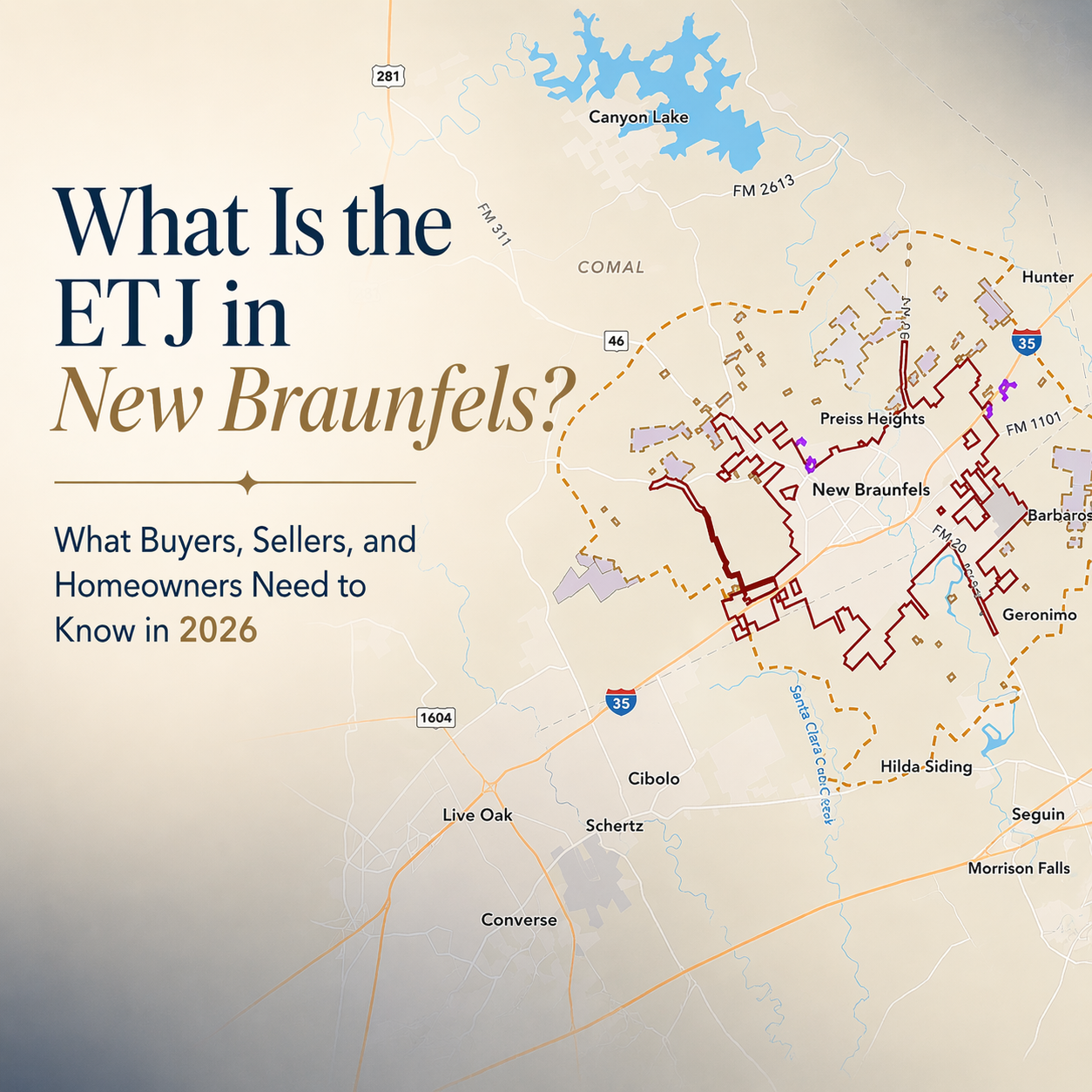
If you are buying, selling, or owning property around New Braunfels, Garden Ridge, or nearby Hill Country areas, there is one local term that deserves a lot more attention than it usually gets: the ETJ, or Extraterritorial Jurisdiction.
For most people, that phrase sounds technical and easy to ignore. But in real estate, it can affect how a property is governed, what may happen around it in the future, and how comfortable buyers feel about long-term value.
And right now, this matters more than it used to.
The City of New Braunfels publicly maintains a City Limits and ETJ map, and Texas law now provides a process for certain areas to be released from a city’s ETJ by petition or election. In other words, this is not just a planning term anymore. It is something buyers, sellers, and landowners may hear more often as growth continues around New Braunfels.
What is the ETJ?
The ETJ is land that sits outside the official city limits but is still subject to some level of municipal oversight, especially when it comes to subdivision and development regulation. It is not the same thing as being inside the city, and it is not the same thing as being fully outside city influence either.
A simple way to think about it is this:
Inside city limits means the city fully governs the property in the usual ways.
Inside the ETJ means the property is outside the city, but the city may still have some say in how land is divided and developed.
Outside both city limits and the ETJ generally means more of that authority shifts away from the city and toward the county.
Why are more people talking about the ETJ now?
One big reason is that Texas changed the annexation landscape. The Texas Legislature previously eliminated forced annexation, and later changes created a clearer process for certain landowners or residents to petition to have property released from a city’s ETJ. Senate Bill 2038 took effect in 2023, and Chapter 42 of the Texas Local Government Code now lays out release procedures.
That matters because areas around growing cities are no longer as static as many people assume. ETJ boundaries can become part of real conversations about development, control, and future land use.
Why does this matter if you are buying a home?
Because you are never just buying the house.
You are also buying into a tax structure, a development environment, and a level of predictability around the property.
In today’s market, buyers are already making more careful decisions. Freddie Mac’s 30-year fixed mortgage rate was 6.30% as of April 16, 2026, and New Braunfels homes were averaging 112 days on market in March. When affordability is tighter and homes are taking longer to move, buyers tend to ask more questions about the total picture, not just the kitchen and floor plan.
If a home is inside city limits, buyers may expect more structured development around them, but they also need to understand city taxation and city service expectations.
If a home is in the ETJ, buyers may like the lower-tax feel of being outside city limits while still having some development guardrails in place.
If a home is outside the ETJ entirely, that can appeal to buyers who want more freedom, more land, or fewer city-related constraints. But it can also raise questions about surrounding development, infrastructure, and long-term predictability.
What does this mean for sellers?
For sellers, ETJ status is not automatically a selling point or a problem. It depends on the buyer.
Some buyers love the idea of being outside city limits. They may be looking for larger lots, lower tax burden, more flexibility, or a more rural feel.
Other buyers want more certainty. They care about what can be built nearby, whether services are centralized, and whether the surrounding area is likely to stay visually and functionally consistent.
That is why ETJ status should not just be treated like a background detail in the MLS. It should be part of the property story.
A well-positioned listing can explain the upside clearly:
lower city-related burden, room to breathe, or a more flexible setting.
A smart listing can also answer the questions buyers are already wondering:
What governs this property? What may happen around it later? How should I think about this in five or ten years?
What should homeowners understand?
Homeowners often focus on their lot, their home updates, and their tax value, but one of the biggest forces affecting long-term enjoyment and resale is the land around them.
That is where ETJ conversations become especially important.
If nearby areas remain under some city-related development control, that may create one set of expectations.
If nearby areas are released from the ETJ, that can create a different path for future land use and development review. In removed areas, counties may become the primary regulating authority for subdivision matters rather than the city.
That does not automatically mean something negative will happen. It simply means homeowners should be more aware of what rules apply where.
How do you actually use this information?
Start with these practical questions:
Is the property inside city limits, in the ETJ, or outside both?
What map or city source confirms that?
What authority applies to nearby undeveloped land?
What type of growth is already happening in the surrounding area?
Would this setup feel like a benefit or a risk to the likely next buyer?
Those are the kinds of questions that help buyers avoid surprises and help sellers market more intelligently.
The bottom line
The ETJ is one of those local real estate topics that sounds small until you realize how much it can shape the feel, future, and marketability of a property.
Around New Braunfels, Garden Ridge, and the surrounding Hill Country, this is becoming more relevant as growth continues and more people pay attention to where city influence begins and ends.
Correa Realty Group helps buyers, sellers, and homeowners look beyond the front door and understand the bigger picture around a property. If you want help checking whether a home is in city limits, in the ETJ, or outside it, we would be glad to help you make sense of it before you buy or list.
FAQs
What does ETJ stand for in Texas?
ETJ stands for Extraterritorial Jurisdiction. It refers to land outside city limits where a city may still have certain development-related authority.
Does being in the ETJ mean I am inside the city?
No. A property in the ETJ is outside the city limits, even though the city may still have some authority over development matters.
Can land leave the ETJ?
In some cases, yes. Texas law provides procedures for release from a municipality’s ETJ by petition or election.
Why should buyers care?
Because ETJ status can affect how people think about surrounding development, predictability, and long-term resale.
Check out this article next