


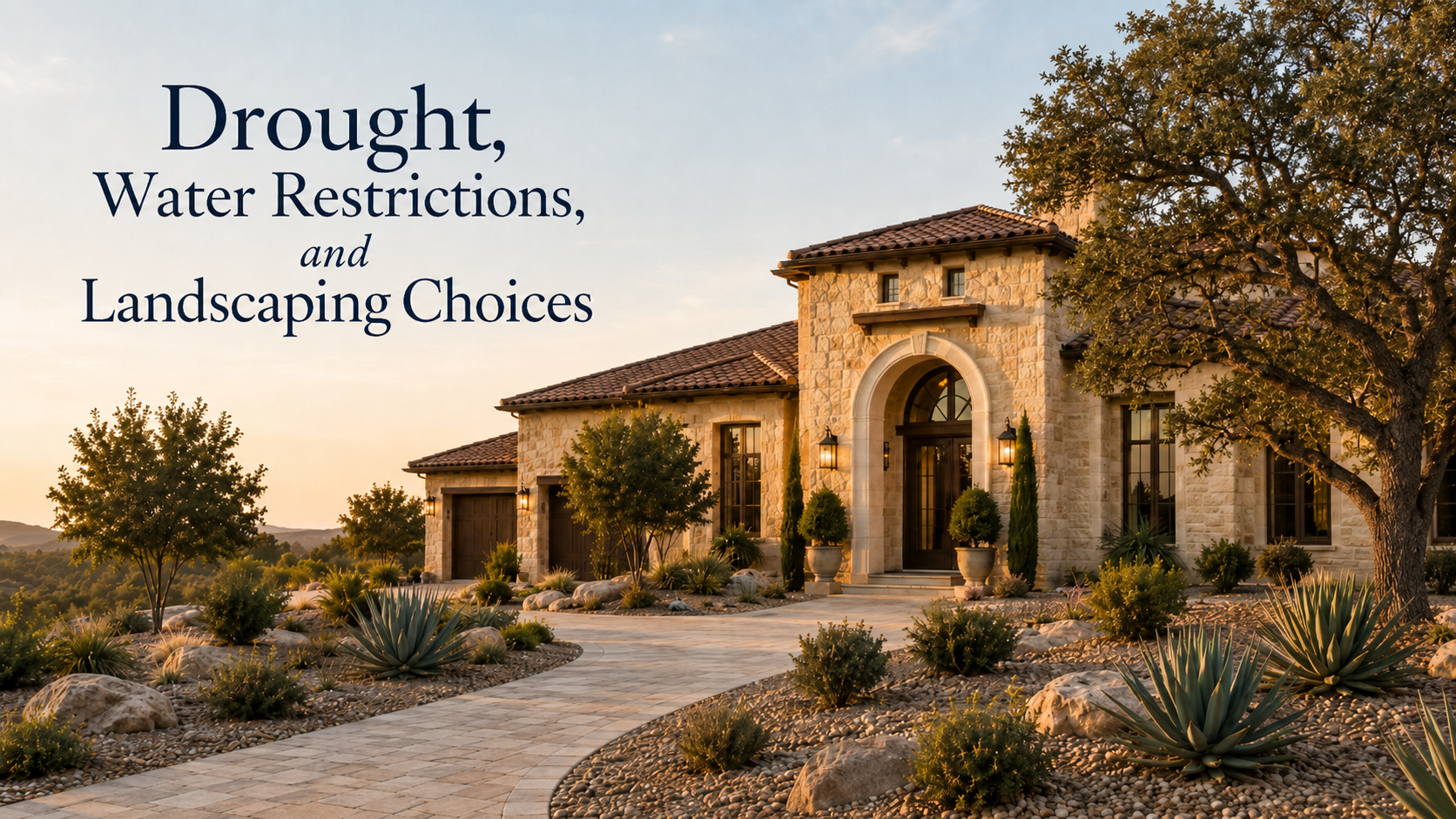
If you own a home in Garden Ridge, San Antonio, New Braunfels, Schertz, Cibolo, Bulverde, Spring Branch, or anywhere along the Hill Country edge, you already know that landscaping in South Texas is not as simple as planting grass and hoping for the best.
Between summer heat, drought conditions, watering limits, rising utility costs, and the challenge of keeping a yard attractive, many homeowners are rethinking what a “nice yard” should look like in this part of Texas.
For years, a green lawn was the default standard. But in today’s market, especially across the San Antonio and Hill Country area, a well-designed, water-conscious landscape can be just as appealing — and often more practical — than a thirsty lawn that struggles through summer.
This does not mean every homeowner needs to remove all grass or turn the front yard into rock. It means homeowners should start thinking differently about curb appeal, maintenance, water use, and long-term value.
Why Landscaping Choices Matter More in South Texas
Landscaping is one of the first things people notice about a home. It shapes curb appeal, neighborhood appearance, and the way a property feels before anyone walks through the front door.
But in our area, landscaping also affects:
Water usage
Utility bills
Maintenance costs
Foundation moisture consistency
Tree health
HOA compliance
Buyer perception
Long-term ownership costs
A yard that looks great in April can struggle by July if it depends heavily on frequent watering. That matters in areas like Garden Ridge, New Braunfels, San Antonio, Schertz, and Cibolo, where summer heat can be intense and watering rules can limit when and how often homeowners can irrigate.
For larger-lot homes in Garden Ridge, Bulverde, Spring Branch, and nearby Hill Country communities, the challenge can be even bigger. More land often means more landscaping decisions, more irrigation zones, more trees to maintain, and more cost if the landscape is not designed for the climate.
The Goal Is Not a Perfect Lawn — It Is a Resilient Landscape
One of the biggest shifts homeowners may need to make is moving away from the idea that a perfect green lawn is the only version of curb appeal.
In South Texas, a resilient landscape is often more valuable than a high-maintenance one.
A resilient landscape may include:
Native or adapted plants
Mulched beds
Healthy shade trees
Reduced turf areas
Drip irrigation
Rock or decomposed granite used thoughtfully
Defined walkways and borders
Proper drainage
Seasonal color in smaller, intentional areas
Foundation-conscious watering practices
The best landscapes still feel warm, attractive, and cared for. They simply use smarter materials and plant choices for the climate we actually live in.
What Homeowners Should Know About Water Restrictions
Water restrictions can vary depending on where you live and which utility or water provider serves your home.
That is important because Garden Ridge, San Antonio, New Braunfels, and surrounding areas may not all follow the exact same rules at the same time. Even within the broader San Antonio region, watering days, hours, irrigation limits, drip watering rules, and hand-watering rules can differ by provider.
Before making any major landscaping changes, homeowners should confirm:
Their current watering stage
Their assigned watering day
Approved watering hours
Whether drip irrigation is treated differently than sprinkler irrigation
Whether hand watering is allowed
Whether new landscaping has any temporary establishment rules
HOA or neighborhood landscape requirements
This is especially important for homeowners installing sod, replacing large sections of grass, planting new trees, or redesigning front beds.
The last thing a homeowner wants is to spend money on new landscaping only to realize it cannot be watered the way they expected.
Grass Still Has a Place — But It Should Be Intentional
Grass is not the enemy. In many homes, some lawn space still makes sense.
Grass can be useful for:
Children and pets
Play areas
Visual softness
Neighborhood consistency
Erosion control
Outdoor living areas
The issue is not whether a home has grass. The issue is whether the amount and location of grass makes sense for the property, the climate, and the homeowner’s maintenance expectations.
For example, a smaller turf area near a patio may be easier to maintain than a large front yard that receives full afternoon sun. A shaded section of grass under large trees may struggle no matter how much water is applied. A steep or rocky area may be better suited for native plantings, mulch, or hardscape.
The most practical approach is often not “all grass” or “no grass.” It is choosing where grass adds real value and where a different landscape choice would perform better.
Native and Adapted Plants Can Improve Curb Appeal
Drought-conscious landscaping does not have to look dry, sparse, or unfinished.
Many native and adapted plants can add color, texture, movement, and seasonal interest while using less water than traditional turf-heavy designs.
Depending on the property and conditions, homeowners may consider plants such as:
Texas sage
Salvia
Lantana
Pride of Barbados
Turk’s cap
Esperanza
Rosemary
Cenizo
Red yucca
Agave
Gulf muhly
Mexican feather grass
Autumn sage
Yaupon holly
Mountain laurel
The right plant depends on sun exposure, soil, drainage, deer pressure, HOA rules, and how much maintenance the homeowner wants. In Garden Ridge and Hill Country areas where deer are common, plant selection becomes even more important.
A well-planned landscape can look polished without depending on constant watering.
Trees Deserve Special Attention
In South Texas, mature trees are a major part of a property’s appeal.
Large oaks, shade trees, and established tree canopies can make a home feel more settled, cooler, and more private. In neighborhoods like Garden Ridge, older parts of New Braunfels, north San Antonio, and Hill Country communities, trees can be one of the strongest features of a property.
But drought can stress trees. A lawn may go dormant and recover, but a mature tree that declines can be expensive or impossible to replace.
Homeowners should pay attention to:
Deep watering needs
Mulch around tree root zones
Avoiding over-pruning during stressful periods
Signs of disease or decline
Soil compaction
Construction or hardscape near roots
Irrigation coverage that misses tree areas
When in doubt, it is worth consulting a qualified arborist, especially before removing major limbs or making changes around mature trees.
Be Careful With Too Much Rock
Rock landscaping can be useful, but it should be used carefully.
A common mistake is replacing large areas of grass with rock without thinking through heat, drainage, appearance, and long-term maintenance. Rock can radiate heat, make a yard feel harsher, and sometimes create drainage or weed-control issues if not installed correctly.
In some situations, rock or decomposed granite works well for pathways, side yards, dry creek beds, utility areas, or modern landscape designs. But a yard that is mostly rock may not create the warm curb appeal many homeowners want.
A better approach is often a balanced design using:
Mulch
Native plants
Defined beds
Limited turf
Shade trees
Stone borders
Walkways
Proper drainage features
The goal is to reduce water demand without making the home feel bare or overly hardscaped.
Landscaping and Resale Perception
Even if you are not planning to sell right now, landscaping decisions can affect future buyer perception.
Buyers may not expect a perfect lawn during a drought, but they do notice whether a yard feels cared for, functional, and manageable.
A buyer may respond positively to:
Healthy trees
Clean beds
Fresh mulch
Defined walkways
Trimmed shrubs
Practical irrigation
Low-maintenance plantings
Good drainage
A yard that feels intentional
A buyer may be concerned by:
Dead or patchy turf with no plan
Overgrown beds
Damaged irrigation
Poor drainage
Bare dirt near the foundation
Tree limbs touching the roof
Landscaping that looks expensive to correct
Excessive rock without visual softness
The key is not perfection. It is showing that the property has been maintained and that the landscaping fits the local climate.
What About Foundation Watering?
Foundation movement can be a concern in many parts of Texas, especially during long dry periods followed by heavy rain.
This does not mean homeowners should overwater. But it does mean consistency matters.
Homeowners should pay attention to:
Large cracks in soil near the foundation
Poor drainage toward the home
Gutters discharging too close to the slab
Areas that stay too dry or too wet
Trees planted too close to the structure
Irrigation patterns around the home
A foundation specialist, irrigation professional, or qualified contractor may be helpful if there are visible concerns. For most homeowners, the goal is simple: manage water around the home in a consistent, responsible way.
Practical Landscaping Steps for This Summer
If your yard is struggling this summer, you do not necessarily need a full landscape redesign. Start with practical steps.
1. Confirm Your Current Watering Rules
Check your water provider’s current restrictions before making changes. Rules can vary by location and can change as conditions change.
2. Focus on Trees First
Protect mature trees where possible. They are often more valuable and harder to replace than turf.
3. Refresh Mulch
Mulch can help beds look cleaner while supporting soil moisture and reducing weeds.
4. Reduce Struggling Turf Areas
If a section of grass fails every summer, it may be a sign that area should become a bed, pathway, or lower-water feature.
5. Choose Plants That Fit the Site
Sun, shade, drainage, deer, soil, and maintenance expectations all matter.
6. Repair Irrigation Issues
Broken sprinkler heads, overspray, poor coverage, and leaks waste water and can hurt the landscape.
7. Keep the Yard Looking Intentional
Even during drought, trimmed edges, clean beds, and maintained trees can make a big difference.
A Local Mindset for Homeowners
In Garden Ridge, San Antonio, New Braunfels, Schertz, Cibolo, Bulverde, Spring Branch, and nearby Hill Country communities, smart landscaping is becoming less about fighting the climate and more about working with it.
That does not mean giving up curb appeal. It means building curb appeal that can handle South Texas summers.
A thoughtful landscape can help your home look cared for, reduce frustration, support long-term maintenance, and make the property feel more livable.
Final Thoughts
Drought and water restrictions are not just temporary inconveniences. They are part of homeownership in this region.
For homeowners, the opportunity is to make landscaping choices that look good, function well, and make sense for the way we live in South Texas.
Whether you are planning to stay in your home for years, preparing for future resale, or simply trying to make your yard easier to manage, a more water-conscious landscape can be a smart investment in your home’s overall appeal.
At Correa Realty Group, we help homeowners think through the details that affect both day-to-day living and long-term home value across Garden Ridge, San Antonio, New Braunfels, Schertz, Cibolo, and the surrounding Hill Country area.
If you are wondering which improvements may matter most for your home, neighborhood, or future plans, we would be happy to be a local resource.
FAQs
What is drought-friendly landscaping?
Drought-friendly landscaping is a landscape design approach that uses plants, materials, irrigation, and layout choices that are better suited for dry conditions and hot summers. In South Texas, that often means using native or adapted plants, mulch beds, healthy shade trees, drip irrigation, and smaller areas of intentional turf instead of relying heavily on large grass areas.
Does drought-friendly landscaping mean removing all grass?
No. Grass can still have a place, especially for children, pets, outdoor living, and visual softness. The goal is not necessarily to remove all grass. The goal is to use grass intentionally in areas where it adds value and performs well, while considering lower-water options in areas that struggle every summer.
What are good drought-tolerant plants for the San Antonio area?
Common options include Texas sage, salvia, lantana, Pride of Barbados, Turk’s cap, esperanza, red yucca, agave, rosemary, cenizo, autumn sage, and mountain laurel. The right plants depend on sun exposure, soil, drainage, deer activity, and HOA rules.
Do water restrictions affect new landscaping?
They can. Watering rules vary by city, utility provider, and restriction stage. Before installing sod, trees, shrubs, or new beds, homeowners should check current watering rules and ask whether there are special establishment guidelines for new landscaping.
Is rock landscaping a good idea in South Texas?
Rock can be useful in certain areas, such as pathways, dry creek beds, side yards, and accent areas. However, too much rock can make a yard feel hotter, harsher, and less inviting. A balanced design with native plants, mulch, trees, and defined beds often creates stronger curb appeal.
Can landscaping affect home value?
Landscaping can affect buyer perception and curb appeal. A yard does not have to be perfect, but buyers usually notice whether the property feels maintained, functional, and manageable. Healthy trees, clean beds, fresh mulch, and practical irrigation can make a home feel better cared for.
Should homeowners prioritize grass, plants, or trees during drought?
Mature trees usually deserve special attention because they are expensive and difficult to replace. Grass can often go dormant and recover, but a stressed mature tree may suffer long-term damage. Homeowners should consider protecting trees, refreshing mulch, and choosing plants that fit local conditions.
How can I improve curb appeal during watering restrictions?
Focus on what makes the yard look clean and intentional: fresh mulch, trimmed shrubs, defined bed edges, healthy trees, weed control, repaired irrigation, seasonal color in small areas, and removing dead or overgrown landscaping. Even during drought, a yard can still look cared for.
Check out this article next